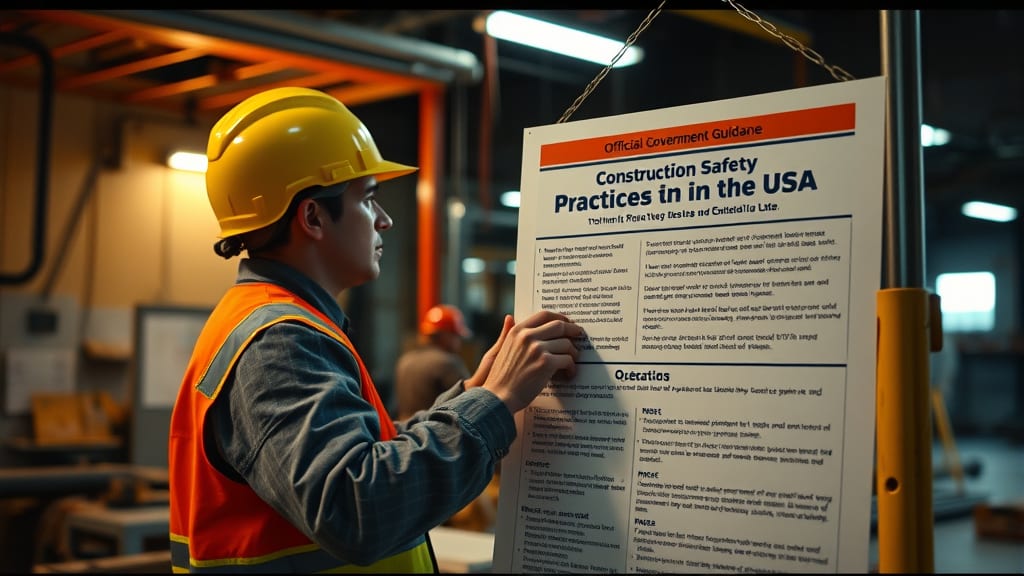
Official Government Guidance on Construction Safety Practices in the USA
Construction sites are among the most hazardous workplaces, making adherence to safety protocols critical. The Occupational Safety and Health Administration (OSHA) sets national standards for construction safety practices, with some states like California enforcing additional regulations under Cal/OSHA. This guide breaks down essential OSHA compliance requirements, hazard prevention strategies, and actionable checklists for small contractors.
OSHA Compliance for Construction Safety
OSHA’s construction standards (29 CFR 1926) cover everything from fall protection to electrical safety. Key areas include:
- General safety and health provisions (1926.20)
- Hazard communication (1926.59)
- Scaffolding safety (1926.451)
California contractors must also follow Cal/OSHA regulations, which often exceed federal standards. For example, Cal/OSHA requires additional fall protection measures for roofs with slopes over 4:12.
Internal Link: For state-specific apprenticeship funding opportunities, see our ROI-Focused Guide to California's $22M Apprenticeship Funding.
Hazard Prevention on Construction Sites
Preventing hazards starts with identifying common risks:
- Falls (leading cause of construction fatalities)
- Struck-by objects (e.g., tools, equipment)
- Electrocutions
- Caught-in/between accidents
Actionable Checklist for Small Contractors:
- Conduct daily site inspections.
- Train workers on hazard recognition.
- Use guardrails, safety nets, or personal fall arrest systems.
PPE Requirements
OSHA mandates personal protective equipment (PPE) for all construction workers:
- Hard hats
- High-visibility vests
- Safety glasses/goggles
- Steel-toe boots
- Gloves (task-specific)
Ensure PPE fits properly and is regularly inspected for damage.
Fall Protection
Falls account for over 33% of construction deaths. OSHA requires:
- Guardrails for edges over 6 feet.
- Safety nets if guardrails aren’t feasible.
- Personal fall arrest systems for workers at heights.
California Note: Cal/OSHA requires fall protection at 7.5 feet for roofing work.
Electrical Safety
Key OSHA electrical safety rules (1926.400):
- Maintain a 10-foot minimum distance from overhead power lines.
- Use GFCI protection for all temporary power outlets.
- Label all breakers and disconnect switches.
Internal Link: Learn about federal funding for trades in our How to Secure $145M in Grants for Apprenticeship Programs Nationwide.
State-by-State Variations
While OSHA sets federal standards, some states have stricter rules:
| State | Key Difference |
|---|---|
| California | Additional fall protection requirements |
| New York | Stricter silica dust regulations |
| Texas | Emphasis on heat stress prevention |
For state-specific guidelines, visit your state hub page.
FAQ Section
What is the OSHA construction safety checklist?
OSHA’s checklist includes inspecting PPE, ensuring fall protection, verifying scaffolding stability, and checking electrical safety measures.
What are the construction safety rules for OSHA?
Key rules include fall protection at 6 feet, PPE use, hazard communication, and regular safety training.
Where can I find construction site safety rules in PDF format?
OSHA provides free PDFs on their website.
What are the top safety tips for construction workers?
- Always wear PPE.
- Inspect tools and equipment daily.
- Follow lockout/tagout procedures.
- Stay aware of surroundings.
Conclusion
Adhering to OSHA and Cal/OSHA standards minimizes risks and ensures compliance. Small contractors should prioritize daily checklists and worker training to avoid violations. For more on apprenticeship opportunities, explore our national apprenticeship guide.
Source: Verified TradePathUSA.com government records
Don't guess with your future.
See verified trade programs, real salaries, and compare local tuition.
Search National DatabaseExplore Top Trade Hubs